Payer Ignored Your Single Case Agreement or Gap Exception: How to Recover the Underpayment
A short payment on a claim covered by a signed single case agreement or gap exception is recoverable, and it is a contract dispute before it is anything else. The rate you have to prove is the one on that agreement, not the repriced allowance from MultiPlan, Zelis, or Data iSight.
Recovering an Ignored Single Case Agreement Payment
A paid claim can still carry an unpaid balance. Compare the payment with the signed single case agreement, then treat any shortfall as a contract-enforcement dispute with its own evidence file and deadline. Federal IDR is a separate route, and many disputes are ineligible for it. A Congressional Research Service review of federal independent dispute resolution reports that in 2024, IDR entities closed more than 1.37 million disputes, with approximately 262,441 cases, or 19%, found ineligible.
For example, if four units of 97110 are paid $13 below the signed rate, the shortfall is $52 for one visit. At 20 such visits a week, about $1,040 a week remains unrecovered. A clean denial report will not flag the problem because the claims show as paid.
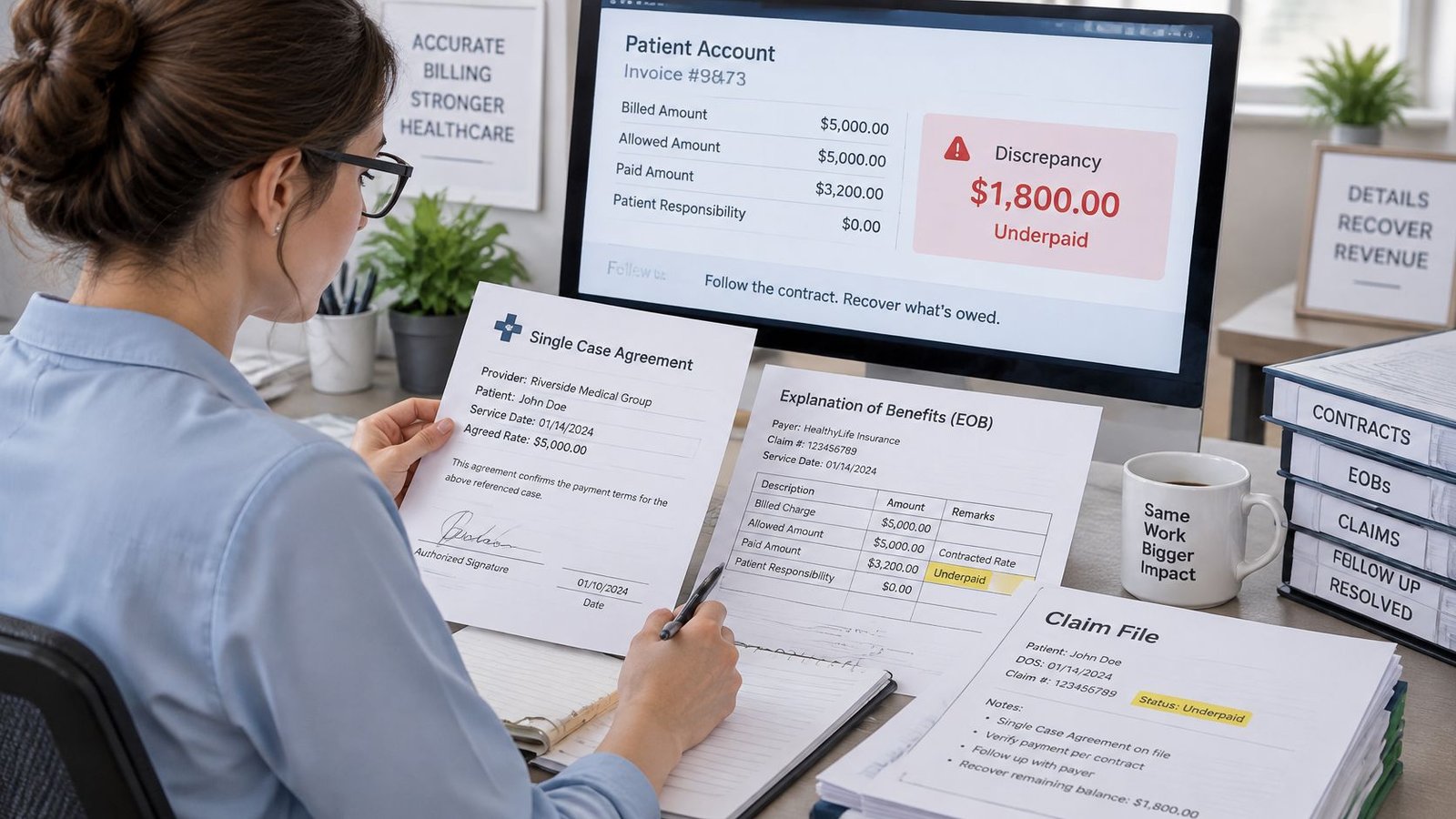
Start with the agreement and the remittance. Confirm the agreed rate, the services covered, and any conditions that apply to payment. Happy Billing audits historical claims to identify and recover under-reimbursed amounts, including claims already paid. For a practical process, see the guide to reopening a deposited underpaid claim.
Happy Billing is a Texas-based revenue cycle management and medical billing partner that recovers underpaid out-of-network claims. Its specialty workflows include anesthesiology, mental health, cardiology, and orthopedics. For context on the distinction between contract enforcement and federal arbitration, read NSA enforcement and single case agreements.
Happy Billing handles end-to-end billing and denial management, investigating rejected claims and appealing them until they are paid in full. Eligible Illinois practices can request a free revenue audit of their last 90 days of claims, with a line-by-line view of what is not being collected and no sales pitch.
The Recovery Timeline From Day 0 to Deadline
The contract deadline controls this recovery, so calendar it before choosing an escalation route. Repeated portal resubmissions do not stop the clock.
| Window | Action | Deliverable |
|---|---|---|
| Day 0 | Record the claim, remittance, signed agreement and authorization in one audit trail | Dated evidence folder |
| Day 3-5 | Submit a written appeal requesting reprocessing under the agreed terms | Appeal confirmation and payer reference number |
| Day 15-30 | Escalate to provider relations, contracting and the plan sponsor | Named representative and written response date |
| Before the contract or statutory deadline | File with the appropriate regulator or pursue the applicable dispute route | Filed copy and proof of delivery |
Why the clocks are not the same
The HealthCare.gov internal appeals guidance describes a patient-facing appeal period of at least 180 days after a denial notice for commercial insured claims. That is not a provider deadline for enforcing a single case agreement. The provider contract and applicable state rules may set different, often shorter, deadlines. Some states also impose their own notice periods for provider underpayment penalties, so confirm the relevant state rule before relying on a date.
Practical rule: Date-stamp the clean-claim receipt, payment date and appeal due date on the folder cover. If any is missing, resolve that gap before escalating.
An authorization confirms service approval, not the payment rate. Send the appeal to the entity responsible for the disputed payment, whether that is the plan, a medical group or a repricer. A timely-filing argument also misses the point when the original claim was timely and the dispute concerns the rate.
What to measure while you wait
Track appeal overturn rate, dollars recovered per appeal, median days to resolution and repeat-issue frequency by payer and root cause. If a fee table is loaded at the wrong repricer rate, correct the underlying setup rather than appealing the same pricing error claim by claim. State prompt-pay laws may allow interest when payment misses a statutory period, but regulator authority varies. Confirm the applicable rule before adding interest to your demand.
If the balance qualifies for federal open negotiation, use the guide to the No Surprises Act open-negotiation notice and 30-day clock. A single case agreement dispute follows its own contract and deadline path; federal negotiation applies only when the dispute meets the law's requirements. Pull the short-paid agreement claims from the last 90 days and calendar each applicable deadline.
Building the Evidence File and Checking the Variance
Treat the ignored agreement as a contract-interpretation and payment-integrity dispute, not a coding denial. The American Medical Association appeal guidance is clear that the packet has to show the deal, the claim, and the math.
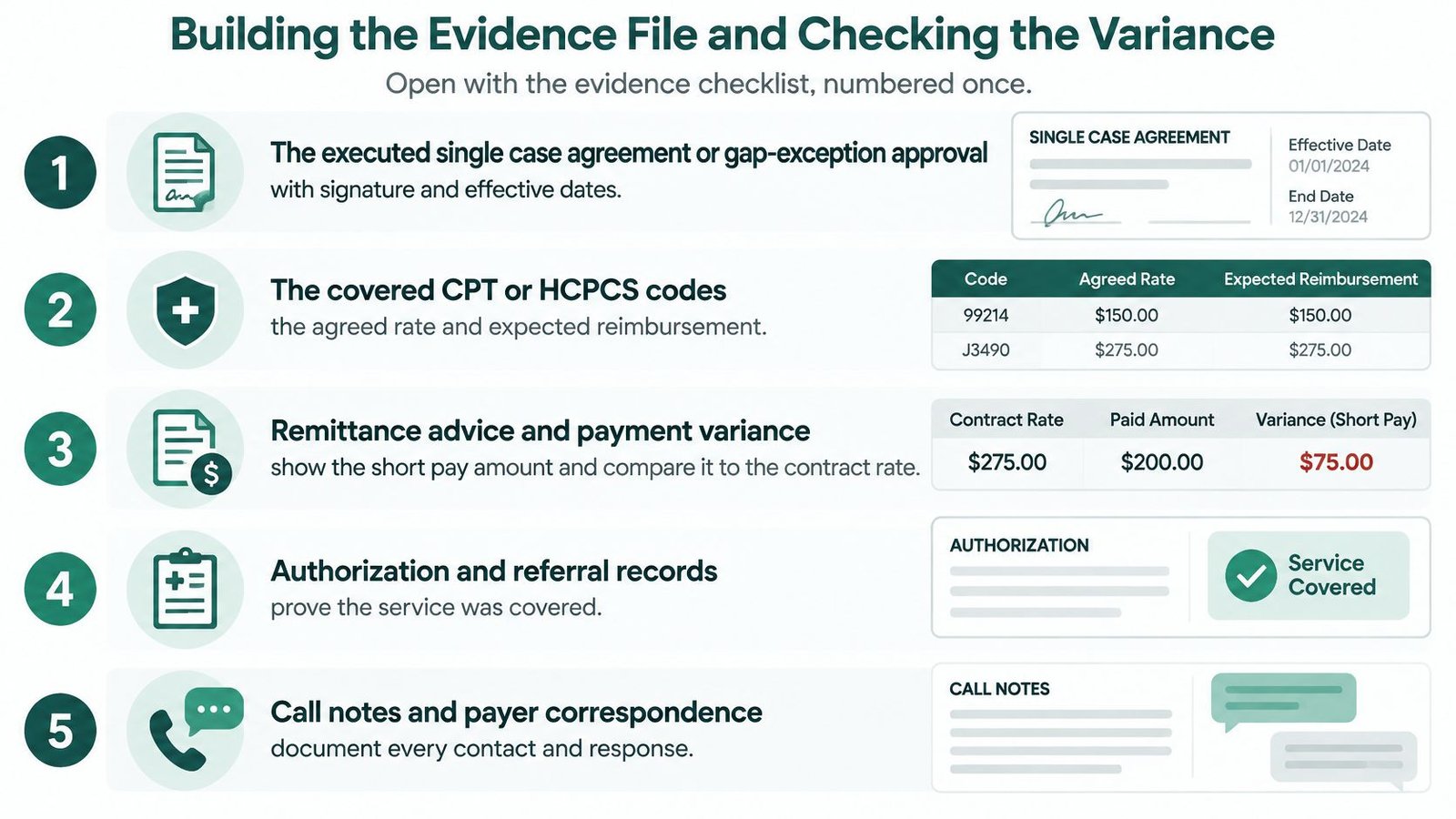
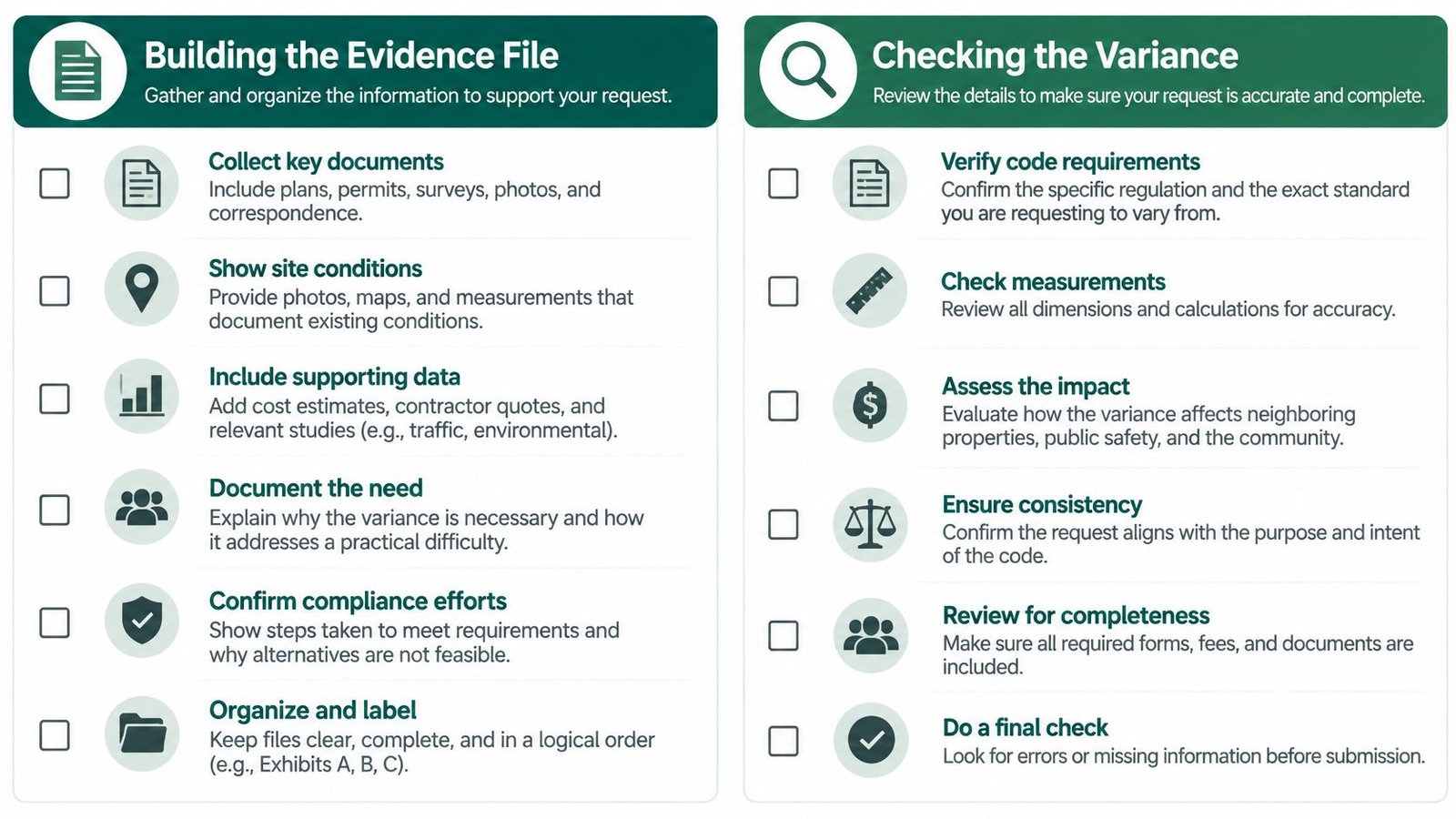
Build it once, in this order:
- Executed approval: The signed single case agreement or gap exception, with signature and effective dates.
- Covered codes: Each CPT or HCPCS code and the agreed rate or percentage.
- Identifiers: Authorization or reference number, plus the provider and facility the agreement names.
- Eligibility: Active coverage on each date of service.
- Records: The note, only when the payer requires it to match units.
- Claim and remit: Original claim, remittance with adjustment reason codes, and the payment date.
- Variance: A line-by-line expected-versus-paid calculation.
The dollars on one visit
Therapy lines under a plan of care need modifier GP, and the units have to match the note before you argue the rate. Most commercial payers count 15-minute units. Medicare's 8-minute rule is a different count. If the note cannot support the units, the payer will reprice the line and ignore the exhibit.
This visit is illustrative, not a fee schedule:
| Line item | Agreed rate | Paid | Variance |
|---|---|---|---|
| 97110 therapeutic exercise, 4 units (illustrative) | $42 per unit | $29 per unit | $52 |
| 97140 manual therapy, 2 units (illustrative) | $38 per unit | $38 per unit | $0 |
| 97530 therapeutic activities, 2 units (illustrative) | $40 per unit | $27 per unit | $26 |
| Visit total (illustrative) | $324 | $246 | $78 |
A Data iSight, MultiPlan, or Zelis remit shows a repriced allowed amount. Compare that figure with the agreed rate, not with your usual charge. How those outputs are built is covered in the out-of-network repricing tools guide. When the payer says the repricer set the contract rate, ask for the repricing rule and the rate that was loaded, then show that the signed exhibit controls the covered codes.
Add more than principal. The recoverable balance includes the rate differential, cost-sharing applied in error, interest, statutory prompt-pay penalties where they exist, and any contractual attorney-fee or arbitration right. A phone promise is not evidence. Get a reference number, the representative's name, submission confirmation, and a written response deadline.
Route the same packet through provider escalation and the network-gap team, and through the plan administrator when the plan is employer-sponsored. Fully insured and self-funded ERISA coverage do not share the same state remedies. If the same short pay repeats across a panel, the pattern test in five signs of systematic out-of-network underpayment tells you whether this is one bad claim or a loaded fee table.
Writing the Appeal That Names the Contract Clause
A refusal to honor the agreement is not automatically a No Surprises Act matter. You first have to show what was agreed, which dates and services it covered, that an authorized payer representative accepted it, and that the claim matched those terms. From January 2022 through December 2025, CMS received 39,999 complaints alleging potential federal insurance-law violations, with qualifying-payment-amount noncompliance, late payment after an IDR determination, and failure to send an initial payment or denial within 30 days among the leading NSA issues. That volume is a reason to label your file correctly before you send it.
Three paragraphs, in this order
Paragraph one identifies the claim. Claim number, member and payer reference, agreement number, effective dates, and the signed exhibit from the evidence packet. Nothing else.
Paragraph two is the contract. Quote the clause, then list CPT codes, units, and modifiers with the agreed rate on each line so a processor can match your figures to the claim system. For the illustrative 97110 line, that is four units at $42, modifier GP, dates inside the agreement window.
Paragraph three is the demand. State the dollar variance, ask for reprocessing of the original claim under the agreed terms, ask that the agreement be stored for related dates of service, and set a written response deadline. Thirty days is a reasonable standard when the contract is silent.
Put the sentence the payer has to answer where it cannot be skimmed past:
Our signed agreement effective [date] sets 97110 at $42 per unit; claim [number] paid $29 per unit under the repriced allowance; we request reprocessing under Section [x].
Keep the demand narrower than the chart
Prove that the authorized services were underpaid. Do not argue that the patient was "an exception" in general. Authorization language is often tighter than the claim that was billed. That gap shows up in anesthesia, behavioral health, emergency, and specialty work, where one extra code outside the letter gives the payer a reason to throw out the whole rate.
I would rather win the lines the letter names than lose the file by stretching it. If the payer stalls, this letter is the escalation package. The mechanics of building that package sit in our out-of-network appeal package checklist.
Escalation Routes Compared, Including When the NSA Does Not Apply
Choose the route that matches the dispute. A short payment under a signed single case agreement is generally a contract-enforcement issue, not automatically a federal IDR case. Sending it through multiple channels at once can create conflicting deadlines.
| Route | Fits when | Governing rule | Watch for |
|---|---|---|---|
| Provider relations escalation | A written appeal went unanswered within the response window | Provider agreement and plan terms | Get a named representative and a written response date |
| NJ DOBI or NY DFS complaint | The plan is fully insured and state prompt-pay or contract rules apply | State insurance law | Does not reach self-funded ERISA plans |
| Plan sponsor or fiduciary | A self-funded employer plan refuses to honor the agreement | Plan document and ERISA | State regulator remedies may not apply |
| Federal IDR | An eligible NSA dispute remains unresolved after 30 business days of open negotiation | No Surprises Act | Screen eligibility first; the filing window is generally 4 business days |
| Arbitration or court | The contract requires arbitration, or no payer contract governs | Contract venue and fee clauses | Review venue and fee terms before filing |
The order that actually moves money
Start with provider relations and contracting. If a claim was priced using a Zelis or MultiPlan allowance instead of the agreed fee schedule, ask those teams to review the configuration and reprocess the claim. Keep the request focused on the agreement and the specific unpaid balance.
For a fully insured plan, consider a complaint to the New Jersey Department of Banking and Insurance or the New York Department of Financial Services when state insurance rules apply. Include the agreement, appeal, payer replies, and payment variance. Confirm the plan is fully insured first; a complaint to either department does not reach a self-funded ERISA plan.
For a self-funded employer plan, direct the dispute to the plan sponsor or fiduciary. The plan document and ERISA govern that route. To distinguish plan types and identify when federal IDR or state law may apply, use this guide to federal IDR eligibility for self-funded and fully insured plans.
Read the arbitration and venue clauses before filing outside the plan's appeal process. Court may be available when arbitration is not required or no payer contract governs, but get legal advice before filing.
Where federal arbitration stops
A short payment does not by itself qualify for federal IDR. The American Association of Oral and Maxillofacial Surgeons summary of the federal process describes the sequence: a 30-business-day open negotiation period after the initial payment or denial, followed generally by a 4-business-day window to start IDR if negotiation fails. The decision is binding, and when the process applies, the determined amount must be paid within 30 calendar days. Missing the filing window can forfeit that route. The federal IDR process for providers explains the steps.
The Act generally does not cover non-emergency care in a freestanding office by an out-of-network practice. Office-based therapy, chiropractic, and many specialty visits may instead turn on the agreement and applicable state law. Screen eligibility before assigning a claim to federal IDR.
Happy Billing's billing team checks out-of-network consumer protection disclosures, notification timelines, and documentation requirements before claims are submitted. For help reviewing a payment dispute, book a call with Happy Billing.
US practices only.
Common Questions About Recovering Underpayments
An ignored single case agreement is a contract-enforcement dispute with its own evidence file and deadline. Keep it separate from federal No Surprises Act arbitration: sending every short payment through the wrong channel can waste time and jeopardize recovery.
Should we appeal every short payment on an agreement claim?
No. Prioritize claims by the recoverable variance, the appeal deadline, and how clearly the signed agreement supports the expected payment. If multiple visits show the same repriced fee, address the recurring rate issue and include the affected claims. A small gap with weak documentation and little time left may warrant less staff effort than a larger, well-supported balance.
Can we bill the patient for the difference?
Generally, do not shift the payer's short payment to the patient. For emergency services and certain non-emergency services, the CMS No Surprises Act fact sheet describes protections against charges above the applicable in-network cost-sharing amount. Keep the recovery effort focused on the payer and the agreement.
How long does the payer have to answer our appeal?
CMS payment FAQs state that an initial payment or denial generally must be issued within 30 calendar days after the payer has the information needed to process a clean claim. That timing does not set the response deadline for a contract appeal. For claims outside the NSA process, follow the agreement's appeal and response terms, and calendar each deadline from the date specified in the contract.
Do we need a lawyer before we escalate?
A written appeal and provider-relations escalation can usually be handled without starting with legal action. Attach the signed agreement, the payer's remittance, the expected-versus-paid calculation, and any relevant correspondence. Review arbitration and venue clauses before choosing another escalation route, and consult counsel before filing a court action.
If a payer is ignoring a signed single case agreement and paying the repriced allowance, Happy Billing audits posted claims to identify and recover under-reimbursed amounts. Visit Happy Billing to see how that recovery service may fit your practice.