8 Questions to Ask a Medical Billing Company Before Hiring
Your practice signs with a billing company that promises better collections and cleaner claims. Ninety days later, cash is tight, denials are piling up, and no one can explain where charges are getting stuck. We see this pattern all the time, especially in high-risk specialties where one weak billing process can drag down revenue fast.
The right questions are the ones that verify performance, specialty fit, reporting discipline, and contract terms. Hiring on sales language is expensive. Hiring on evidence protects margin.
If a vendor cannot show you how they measure outcomes, who owns denial follow-up, how they handle your payer mix, and what happens when performance drops, keep looking. A billing partner should improve first-pass resolution, shorten days in A/R, and protect collection yield by specialty. In cardiology, prior auth and medical necessity mistakes can delay large claims. In behavioral health, authorization and documentation gaps can slow payment for weeks. In surgery, undercoded procedures and missed modifiers cut revenue you do not get back.
Use this article as a due diligence framework. For each question, push past the headline answer. Ask why the metric matters, what benchmark they hold themselves to, what a weak answer sounds like, which follow-up questions expose risk, and which reports or contract language they will provide to verify the claim. If you need a quick refresher on what counts as a clean claim in medical billing, review that before vendor interviews so you can challenge inflated performance numbers.
We recommend treating every vendor interview like a financial review, not a chemistry check. Request sample dashboards. Ask for specialty-specific client references. Review the fee schedule, termination terms, implementation plan, and HIPAA documentation before you discuss price. A low percentage fee means nothing if net collections fall, A/R ages past 90 days, or your front desk spends hours fixing preventable billing errors.
That approach also aligns with broader vendor oversight guidance, including AuditReady's third-party risk management advice. The standard is simple. Make the vendor prove how they protect revenue, how they work inside your specialty, and how you will hold them accountable.
1. What is your clean claim rate and how is it measured?
Your biller submits a month of claims. Then cash stalls. Staff start chasing front-end errors, payer rejections, and corrected claims that should never have been necessary. That problem starts with one metric. Clean claim rate.
Ask for the number first. Then ask how they calculate it. If a vendor gives you a polished percentage without a written definition, treat it as a sales number, not an operating number. We advise practice owners to press for the exact formula because a loose definition can hide rejections, corrected claims, and specialty-specific failure points that delay cash and raise labor cost.

Why this question matters
A high clean claim rate usually means fewer avoidable touches per claim, faster adjudication, and less staff time spent on rework. A weak rate does the opposite. It slows collections, inflates follow-up labor, and masks process problems in registration, coding, charge entry, and edits.
This metric only matters if it is measured correctly.
A credible vendor should tell you whether the rate covers first-pass submissions only, whether payer and clearinghouse rejections count against it, and whether corrected claims are excluded. They should also break it out by payer and specialty. We have seen specialty risk distort this number fast. In anesthesia, modifier and time-unit mistakes can drag down first-pass acceptance. In orthopedics, global-period errors and modifier misuse can create expensive rework. In cardiology, documentation gaps and edit failures can stall high-value procedures.
If you need a baseline before interviews, review what counts as a clean claim in medical billing so you can challenge inflated reporting.
What a strong answer looks like
A strong vendor answers with a definition, a date range, and supporting reports. They can show monthly trends, explain where the data comes from, and separate clearinghouse acceptance from true payer-ready clean claims. They can also explain how coding quality affects the metric, which is one reason practice owners should understand how medical coding shapes healthcare data.
Good answers sound like this:
- We track first-pass clean claims as claims accepted without manual correction after claim creation.
- We report the metric monthly and by payer.
- We exclude corrected claims from the numerator and show them separately.
- We can provide your specialty-specific performance for clients with a similar payer mix.
Weak answers sound expensive:
- Our claims usually go through.
- We have a very high acceptance rate.
- Every specialty is about the same.
- We do not break that metric out by payer or provider type.
Follow-up questions that expose risk
Do not stop at the headline number. Ask:
- What is included in the denominator?
- Do clearinghouse rejections count?
- Do payer front-end rejections count?
- How many claims required correction before payment?
- Can you show the trend for the last 6 to 12 months?
- Can you show this metric for practices in my specialty?
- Which payers pull the rate down, and what is your fix?
Those follow-ups tell you whether the vendor manages revenue or just submits files.
Documents to request for verification
Request proof before you discuss pricing:
- Written metric definition
- Sample monthly dashboard with trend data
- Payer-level clean claim report
- Specialty-specific client report with identifiers removed
- Workflow documentation for edit scrubbing and pre-submission quality checks
- Contract language or service-level commitments tied to reporting cadence
Our recommendation is simple. If the vendor cannot define the metric, show the trend, and produce source reports, move on. A billing partner that protects margin will welcome this level of scrutiny.
2. Do you specialize in my medical specialty, and what is your expertise in our payer mix?
A company that says it serves “every specialty” should make you skeptical. Medical billing isn't generic. The revenue risks in anesthesia, behavioral health, cardiology, orthopedics, pediatrics, and multi-specialty groups are different enough that broad claims of universal expertise usually mean shallow expertise.
The first question we ask is simple. Who on your team has worked claims like ours before? Then we press harder. Which payers? Which service lines? Which common denial patterns?

Why specialty fit changes collections
Anesthesia billing lives or dies on units, concurrency, and modifier discipline. Behavioral health often rises or falls on authorization workflow and payer-specific session rules. Cardiology claims can get trapped in bundling edits, imaging documentation gaps, or modifier issues. Orthopedics faces global period logic, procedure reductions, and post-op billing scrutiny.
Those aren't coding trivia points. They are revenue controls.
A generalist vendor may submit claims. A specialty-ready vendor prevents avoidable revenue loss before submission.
Ask for an example tied to your actual work. If you're an anesthesiology practice, ask how they handle anesthesia time, base units, concurrency modifiers, and payer review of modifier usage. If you run a behavioral health group, ask how they manage authorizations and payer edits on recurring therapy claims. If you're evaluating support for a cardiology group or imaging-heavy service line, ask how they work payer edits around procedural combinations and diagnostic imaging documentation.
You should also ask what they know about your dominant payers. A billing company can understand CPT coding and still fail because it doesn't know how your major commercial plans behave in practice.
What to verify before you hire
- Named specialty experience: Ask who will work on your account.
- Claims examples from your service line: Redacted samples are better than general claims of experience.
- Payer familiarity: Require specifics on the plans that make up most of your collections.
- Update process: Ask how the team tracks payer policy changes and internal workflow changes.
If you want a broader operational view of why coding knowledge changes reimbursement quality, this overview of how medical coding shapes healthcare data is a useful companion read. You can also review Happy Billing's specialty billing services to compare what specialty-specific support should look like.
3. What is your average days in A/R, and how is this tracked and reported?
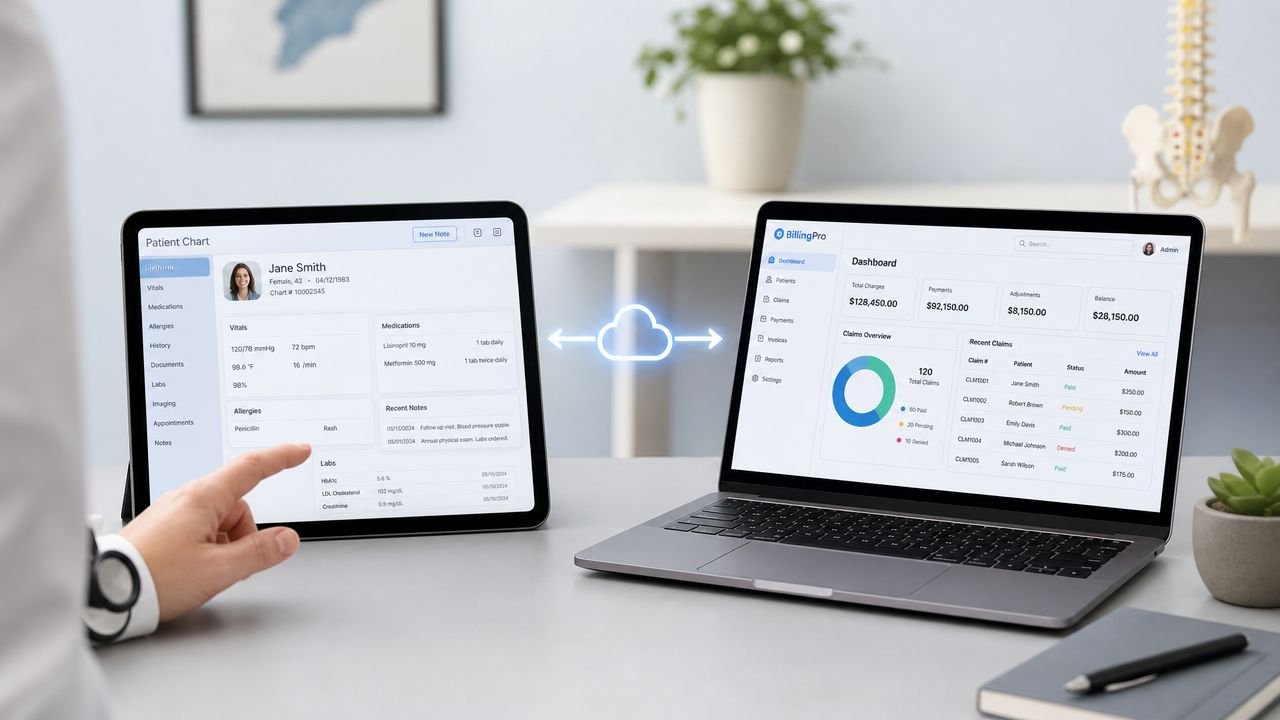
A practice can look busy, book full schedules, and still run short on cash because receivables are aging faster than anyone realizes. Ask this question early because days in A/R shows how fast a billing company turns your work into deposits, and whether they control follow-up with discipline.
A vendor should give you a clear target, define exactly how it is calculated, and show the trend over time. If they answer with a vague range or a single blended number, treat that as a warning sign. We look at days in A/R alongside aging by payer, aging by provider, and aging by claim status because one summary number can hide serious collection problems.
What a strong answer looks like
A serious billing company will explain the metric in plain language. They should tell you whether they calculate A/R on insurance only or total A/R, whether credit balances are excluded, how they handle old legacy balances, and how often the number is refreshed. They should also show you aging buckets, not just a dashboard headline.
Ask to see reporting that answers these questions:
- Which payers are slowing cash: You need payer-level aging, not one blended average.
- Which locations or providers are lagging: That exposes workflow breakdowns and documentation delays.
- Which balances are still collectible: Current A/R and stalled A/R need different follow-up plans.
- Which claim categories are aging: Pending, denied, underpaid, and no-response claims should be separated.
- How quickly the team escalates old claims: A billing partner should have a defined point where standard follow-up becomes active recovery.
Good reporting protects your margin. If orthopedic surgical claims are sitting because operative notes are delayed, that is a documentation problem. If cardiology procedures are aging with one commercial payer, that is a payer management problem. If behavioral health claims drift into older buckets because authorizations were mishandled, that becomes a preventable write-off problem.
What bad answers sound like
“We send monthly reports.”
That answer is weak because it tells you nothing about accuracy, visibility, or action. You need to know who reviews the report, what thresholds trigger escalation, and whether your team can see the same data without waiting for a month-end PDF.
Another bad answer is a proudly low A/R number with no supporting detail. Ask what was excluded. Ask whether old balances were written off before the report was produced. Ask whether the figure includes only top-performing clients or the full book of business.
Follow-up questions to ask
Push past the headline metric. Ask these follow-ups:
- How do you separate new claims from claims stuck in rework?
- How do you identify underpayments versus unpaid claims?
- What is your follow-up cadence by payer and claim age?
- At what age does a supervisor review the account?
- Can you show aging trends for a client similar to my specialty?
- What reports will I receive weekly, monthly, and quarterly?
Then ask for proof. Request a redacted aging report, a sample executive dashboard, and one example of a payer-specific follow-up work queue. If they cannot produce those documents during diligence, expect reporting problems after go-live.
For practices that want to connect aging to collections performance, our guide to medical billing denial management and A/R follow-up workflows explains what disciplined recovery should look like.
One more recommendation. Ask this question in the context of your specialty's financial risk. Anesthesia groups need visibility into delayed high-dollar claims and payer response times tied to modifiers. Behavioral health groups need aging broken out by authorization and recurring visit patterns. Procedure-heavy specialties need fast identification of underpayments, not just unpaid claims. We track these details because days in A/R only matters if it leads to faster cash, fewer write-offs, and stronger net collections.
For a deeper look at how to interpret this metric, review Happy Billing's guide to days in A/R and why it matters.
4. How do you handle denials and what is your denial management process and recovery rate?
At this stage, you find out whether the company is a claim submitter or a revenue partner. Anyone can transmit a claim. Important work starts when payers reject, deny, downcode, or delay.
Ask for the denial workflow step by step. Who categorizes denials? Who decides whether to correct and resubmit, file a formal appeal, or escalate with payer documentation? How do they identify repeat denial patterns across providers, locations, or payers?
What strong denial management includes
A serious billing company should show you a closed-loop process. That means denial identification, root-cause analysis, correction of front-end issues, appeal follow-up, and reporting back to your team so the same mistake doesn't recur.
Examples of financially important denial controls include:
- Modifier discipline: Incorrect use of modifiers such as 59, 76, 77, 78, or 79 can trigger denials or payment reductions.
- Authorization checks: Behavioral health and procedure-heavy specialties often lose revenue when authorization tracking breaks down.
- Bundling review: Cardiology and imaging claims often require tighter review before submission.
- Global period awareness: Orthopedic claims can get denied when post-op billing rules aren't handled correctly.
A weak vendor says “we appeal denials.” That doesn't tell you anything. You need to know what gets appealed, how quickly, and how they prevent repeat denial categories from draining margin month after month.
What to request in writing
- Denial reason sample report: This shows whether the company tracks root causes.
- Appeal workflow document: You want to see timelines, staff roles, and escalation triggers.
- Specialty-specific denial examples: Ask for redacted examples from practices like yours.
- Contract language: Confirm whether denial work is included or billed separately.
If the company can't show a disciplined recovery process, keep looking. You can also compare that answer against Happy Billing's approach to medical billing denial management.
5. What security and HIPAA compliance measures do you have in place?
This question protects revenue too. A billing company that mishandles protected health information exposes your practice to legal, operational, and reputational risk. You're not just outsourcing claims. You're handing over patient demographics, insurance data, diagnoses, and financial records.
The vendor should be ready to explain encryption, access control, audit logs, user permissions, incident response, and business associate agreement terms. If they dance around those basics, stop the process.
What competent vendors can show you
Strong vendors can produce a current business associate agreement, explain where your data is stored, and describe how users are authenticated. They should also explain how they limit access by role and how they investigate unusual account activity.
Ask practical questions, not abstract ones. Is multi-factor authentication required? How are terminated users removed? How are exported files controlled? If they use cloud systems, who administers those environments and how are permissions reviewed?
Security failures don't stay in the IT lane. They create operational shutdowns, legal cost, and payer disruption.
Independent practices should treat this the same way they'd treat hiring a third-party with direct access to their bank account. The billing company sits in a sensitive financial and compliance position.
Documents to request before signing
- Business Associate Agreement: Review it with counsel.
- Security policy summary: You want the operational version, not just a marketing line.
- Incident response overview: Confirm who notifies you and how fast.
- Access control explanation: Make sure permissions are role-based and auditable.
If you're comparing vendors and want a practical list of warning signs, review these medical billing company red flags. For a broader non-legal discussion of secure messaging and privacy controls in healthcare operations, this piece on protecting patient data securely is also helpful.
6. How do you integrate with our EHR system and what is the implementation timeline?
A billing company can look great in a demo and still wreck your workflow during implementation. Ask exactly how they'll work inside your current environment. Then ask what they need from your practice to go live without disrupting charge flow.
Real billing work depends on operational detail. Can they work with your existing EHR and practice-management setup? Can they handle workflows tied to Epic or Cerner? Can they support the billing formats and forms your practice uses, including ICD-10, CPT-4, 837 claim formats, and UB-04, CMS-1500, or ADA forms? Those are concrete workflow competencies called out in healthcare billing operations and implementation hiring standards (Experian healthcare billing implementation role requirements).
What to look for in the answer
A strong vendor describes implementation in phases. System access. Mapping. Testing. Validation. Go-live. Escalation path. They should also tell you who owns each task and what your internal staff must do.
A weak vendor says integration is “easy” without naming the actual workflow. Easy compared to what? If your charges move through multiple modules, provider templates, or manual review queues, that answer doesn't help.
Ask them to walk through one real scenario from encounter to payment. For example, how does a procedure note become a clean claim in your current system? Where do diagnosis, modifiers, and payer edits appear? Where are errors trapped before submission? If they can't map the workflow, they're guessing.
What documents to request
- Implementation plan: With milestones and named responsibilities.
- Testing checklist: To show how claims are validated before production.
- Escalation path: For interface or workflow failures.
- EHR-specific experience summary: Especially if your setup includes custom templates or specialty modules.
For a practice owner, the key issue is simple. Every extra manual handoff creates delay, risk, and hidden labor cost.
7. What is your team structure, staffing model, and availability?
The best workflow in the world still fails if the company doesn't have enough trained people behind it. Ask who will work your account, who covers absences, and whether the vendor has enough specialty depth to handle turnover, payer rule changes, and claim spikes.
This question matters even more in a tight labor market. The U.S. Bureau of Labor Statistics projects employment for medical records specialists, which includes medical billers and coders, will grow 7% from 2024 to 2034, with about 14,200 openings per year on average, and reports a median annual wage of $50,250 in May 2024 (BLS outlook for medical records specialists). For a practice owner, that's a clear warning. Billing talent is in demand, so you should assume staffing depth is a real operational risk unless the vendor proves otherwise.
What strong staffing answers include
You want named roles. Account manager. Coding oversight. Denial follow-up lead. Backup contact. Escalation contact. If the vendor won't identify who owns your revenue cycle work, accountability will get blurry the moment a problem appears.
Ask whether your account is handled by generalists or a specialty-aligned team. That matters in anesthesia, behavioral health, cardiology, orthopedics, and multi-specialty groups where payer behavior and coding risk differ. Also ask how they cross-train. One key person leaving shouldn't stall appeals or create a reporting blackout.
Good staffing isn't an administrative detail. It's protection against dropped claims, missed filing deadlines, and unmanaged denials.
What to verify
- Credentialing and training approach: Ask how staff stay current.
- Backup coverage: Confirm who steps in during absence or turnover.
- Specialty familiarity: Require specifics tied to your case mix.
- Communication rhythm: Weekly, monthly, and urgent-issue response expectations should be clear before contract signature.
If the company can't show depth, don't assume they'll build it after you sign.
8. What is your pricing model and how is it calculated? Are there hidden fees or add-ons?
Many practice owners often encounter a common pitfall. The quoted fee looks manageable, then the extras appear. Denial work. Patient statements. Credentialing. Custom reports. Old A/R cleanup. Interface work. Termination support. By the time you see the actual bill, the contract is already live.
Start with the hard question. What exactly is included in the base fee, and what triggers additional charges? Then ask the more important one. Does the pricing structure align with performance or just activity?
Don't evaluate price in isolation
The U.S. medical billing services market is fragmented, with 1,364 businesses in 2024, down at a 3.4% CAGR from 2019 to 2024, while industry revenue is forecast to reach $4.8 billion by the end of 2024 and market size is estimated at $4.3 billion in 2026 (IBISWorld analysis of the U.S. medical billing services industry). That matters because fragmentation creates wide variation in service quality, reporting standards, and contract discipline. You need proof, not a low headline number.
A good pricing proposal is itemized. It tells you what happens with denials, secondary claims, patient balances, old A/R, implementation, and offboarding. A bad one compresses everything into a short rate quote and leaves key costs undefined.
The hidden-fee questions smart buyers ask
- What happens at termination: Ask for the offboarding fee schedule in writing.
- Who owns the data export: Don't assume reports and notes will be easy to retrieve.
- How are open claims transferred: Outstanding appeals and aging balances can get messy fast.
- What services cost extra: If denial work or reporting is extra, your effective fee may be far higher than quoted.
One of the most overlooked questions to ask a medical billing company before hiring is how they handle exit risk and data portability. A behavioral-health billing guide specifically recommends asking how claims data, aging reports, and notes will be delivered when switching partners, and whether there is a transition plan for outstanding claims and appeals (guidance on switching medical billing partners and retrieving claims data).
Review your pricing options against total financial impact, not just the sales quote. Happy Billing's breakdown of medical billing outsourcing costs can help frame that comparison.
8-Point Comparison: Questions for Medical Billing Vendors
| Item | Implementation complexity | Resource requirements | Expected outcomes | Ideal use cases | Key advantages |
|---|---|---|---|---|---|
| What is your clean claim rate and how is it measured? | Low–Medium: metric calculation is straightforward but requires consistent definitions | Claims history, reporting tools, specialty filters, analytics | Higher first-pass acceptance, reduced rework, faster cash flow | Vendor selection, benchmarking vendor quality | Objective, quantifiable measure of submission accuracy and automation effectiveness |
| Do you specialize in my medical specialty, and what is your expertise in our payer mix? | High: requires specialty coding, payer rules knowledge, and dedicated teams | Specialty-trained coders, payer contract expertise, vertical teams | Fewer specialty-specific denials, faster ramp-up, improved coding accuracy | Specialty practices (anesthesia, cardiology, mental health, orthopedics) | Tailored workflows and payer relationships that reduce specialty-related errors |
| What is your average days in A/R, and how is this tracked and reported? | Medium: needs A/R tracking, aging reports, and dashboards | Real-time A/R dashboard, follow-up protocols, reporting systems | Faster cash conversion, improved working capital, predictable cash flow | Practices needing cash flow improvement or forecasting | Direct indicator of operational efficiency and collections performance |
| How do you handle denials and what is your denial management process and recovery rate? | High: requires prevention, root-cause analysis, and appeals capability | AI/rules engines, appeals team, analytics, payer liaisons | Higher recovery of denied claims, reduced future denial rates | Practices with frequent or high-value denials | Recovers lost revenue and drives systemic process improvements |
| What security and HIPAA compliance measures do you have in place? | Medium–High: technical controls plus legal/compliance processes | BAA, encryption (in transit/at rest), MFA, SOC 2, pen testing, IR plan | Lower breach risk, regulatory compliance, reduced liability | Any practice handling PHI or subject to audits | Legal protection, patient trust, and documented security posture |
| How do you integrate with our EHR system and what is the implementation timeline? | High: requires API/HL7/FHIR integration and testing, may need custom work | Integration engineers, EHR connectors, testing environment, change management | Reduced manual entry, fewer coding errors, minimal workflow disruption | Practices wanting seamless billing-EHR workflows or large EHR deployments | Bi-directional data flow and faster time-to-productivity with strong integration |
| What is your team structure, staffing model, and availability (24/7 support)? | Medium: organizational design and staffing across time zones | Follow-the-sun model, dedicated account teams, specialty staff, SLAs | Faster claim follow-up, continuity, and responsive support | High-volume or around-the-clock practices, multi-site groups | 24/7 coverage, dedicated contacts, and scalability with redundancy |
| What is your pricing model and how is it calculated? Are there hidden fees or add-ons? | Low–Medium: pricing design varies but documentation is straightforward | Pricing analytics, clear proposals, itemized fee structures | Predictable costs or incentive alignment depending on model | Practices comparing TCO or aligning vendor incentives to outcomes | Transparent proposals enable ROI comparison; multiple models (percentage, per-claim, retainer) to fit needs |
Making Your Final Decision It's About Partnership, Not Just Processing
A practice hires the wrong billing company, and the fallout shows up fast. Cash posting slows, denial queues grow, patient balances get messier, and no one can tell you who owns follow-up. Your decision affects revenue cycle speed, margin, and how much work your internal team still has to absorb.
Treat the final selection like financial due diligence. Every claim a vendor makes should be matched to proof, a follow-up question, and a document request. If they say their clean claim rate is strong, ask how they define it, whether they exclude corrected claims, and request a recent sample report. If they claim specialty expertise, ask for examples tied to your payer mix, common modifiers, authorization rules, and denial trends. If they promise aggressive denial recovery, ask to see the workflow, escalation steps, aging rules, and a redacted work queue.
Good vendors answer clearly and show their work. Weak vendors talk in generalities, avoid definitions, and rely on polished sales calls.
Use a hard filter. Will this company help you collect more revenue, shorten time to cash, reduce write-offs, and lower staff rework? If you cannot verify that outcome, it should not carry weight in the buying decision.
We recommend scoring finalists across five areas: financial performance, specialty fit, operating discipline, reporting transparency, and transition risk. Then validate each score with documents, not opinions. Ask for sample monthly KPI reports, a redacted denial inventory, an implementation plan, security materials, the business associate agreement, the full pricing schedule, and contract terms covering termination, data transfer, and ownership of open A/R. That is how you separate a billing processor from a true revenue partner.
Specialty fit deserves extra weight because the revenue risks are different. Anesthesiology groups lose money on unit capture, concurrency rules, and modifier errors. Behavioral health practices lose revenue through authorization failures and payer-specific documentation gaps. Cardiology groups get delayed by medical necessity edits and procedure coding mistakes. Orthopedic groups lose margin through global period errors, implant billing problems, and weak appeal follow-through. We see these issues hit net collections and cash velocity directly.
If you want to see how specialty-specific billing support should look in practice, review Happy Billing's approach to anesthesiology billing.
What's a bigger red flag, a high denial rate or long days in A/R?
A high denial rate is the earlier warning sign because it usually creates the long A/R problem later. Bad claims slow cash, increase rework, and force your team to spend more labor chasing revenue that should have been paid the first time.
How much should I expect to pay for a high-quality medical billing service?
Judge the fee against total financial impact. A lower rate is a bad deal if the vendor leaves denials unresolved, charges extra for reporting, or pushes work back onto your staff. Compare price against net collections performance, scope of work, reporting quality, and the time your team still has to spend managing the vendor.
Can I switch billing companies without disrupting cash flow?
Yes, if the transition plan is detailed before the contract is signed. Require a written timeline covering credentialing effects, claim cutover, open A/R ownership, denial status, patient balances, data export, and system access changes.
What should I ask for before signing the contract?
Ask for the full fee schedule, sample KPI reports, security documentation, the business associate agreement, implementation milestones, service levels, and written terms for termination and data transfer. If a vendor hesitates, answers partially, or refuses documentation, treat that as a financial risk.
If your practice wants a billing partner focused on cash velocity, denial prevention, and specialty-specific accuracy, talk to Happy Billing. We help independent practices pressure-test billing performance and choose a partner that protects collections, reduces A/R drag, and limits preventable revenue leakage.